Chasing the Dark
How Two Communication Arts Members Are Interacting with the Global Effects of Light Pollution
When you look up at the night sky, are you struck by an endless horizon of dazzling stars or the intense glow of a full moon? You could be lucky and see the wisping bands of green and blue from the northern lights. Or maybe, you cannot see much at all.
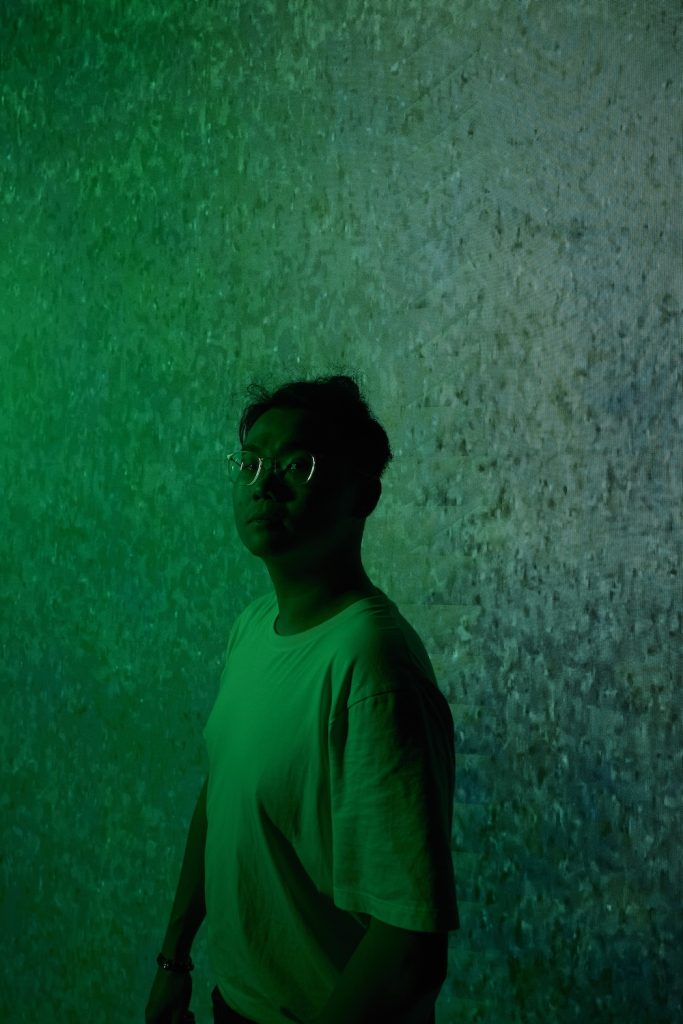
For many around the world, the skies no longer glitter with billions of stars each night because of light pollution. Relatively little scholarly work has been produced on this from a communication perspective, but Communication Arts is lucky to have two researchers digging into the topic and what it means for the world. Ph.D. student Chang-Ching Su has spent the last several years using his artistic skills to showcase a particular light pollution phenomenon: squid fishing in East Asia.
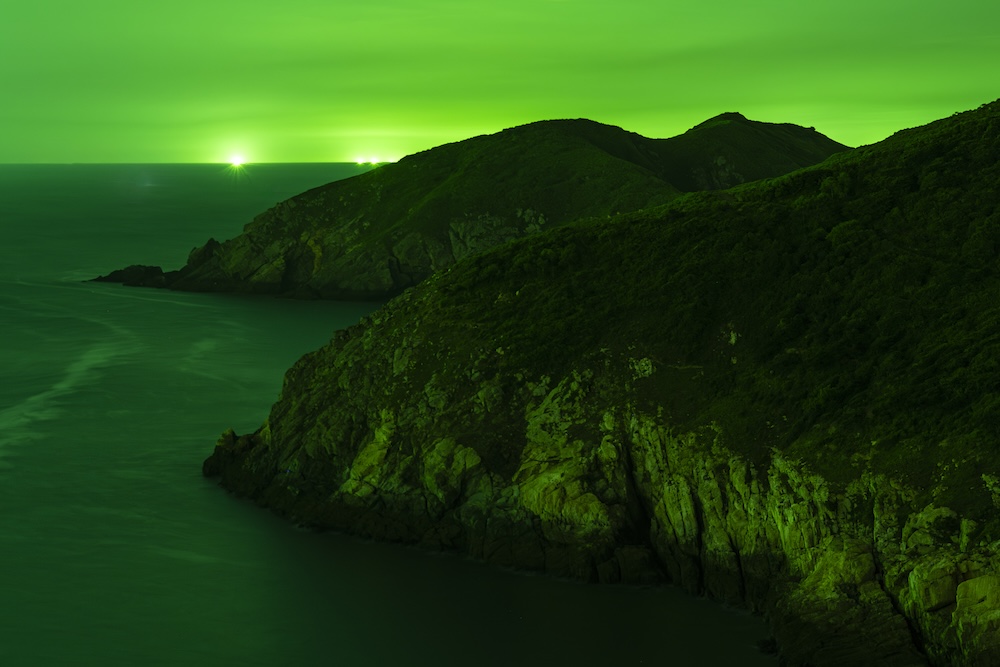
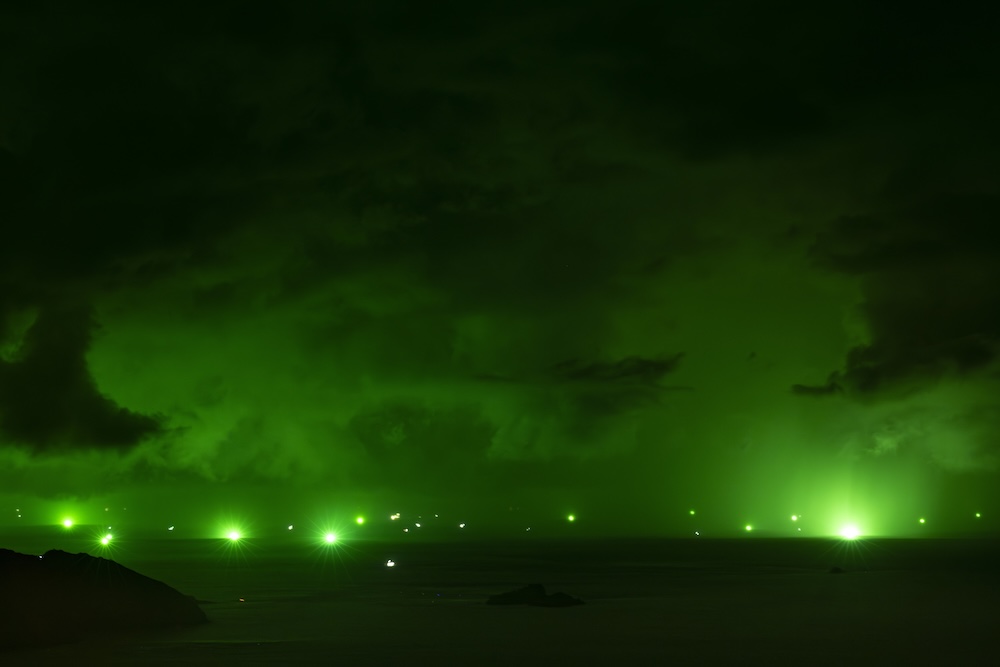
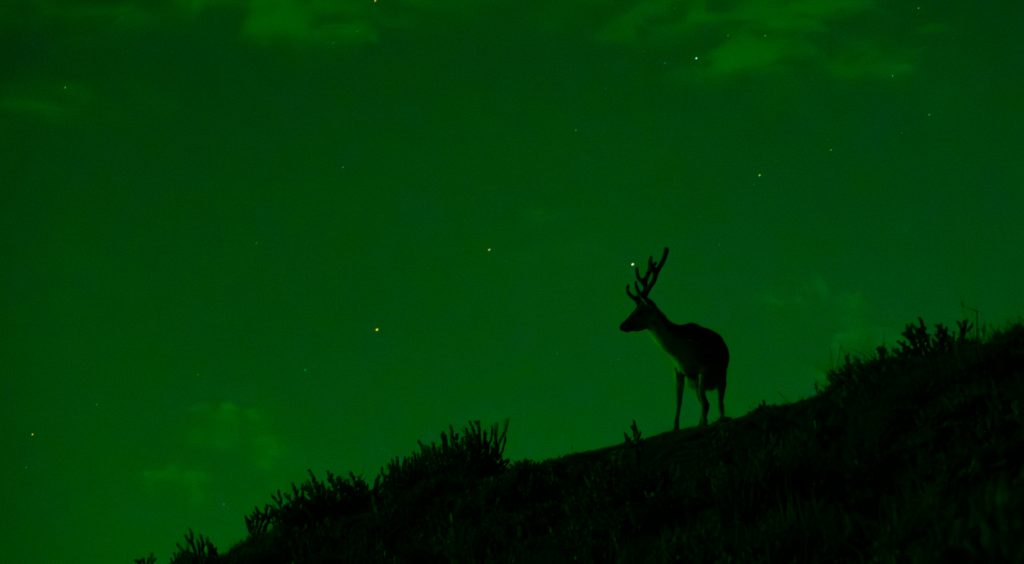
Every night, Chinese fishing boats sail through the Taiwan Strait to catch squid for the global market. To increase their load, the boats use high-power green LED lights that attract small fish and plankton to the surface of the sea. Squid swim up to feast on the prey, making them easier to capture. While the practice increases the number of squid caught, the green light emissions cast over the Taiwanese Matsu Islands is staggering and disturbs the dark sky conservations present on the archipelago. Su has used his photography skills to expose how the spectacle affects his home while showcasing how the practice creates a unique aesthetic and amplifies the geopolitical tensions between Taiwan and China.
“In China, they frame it as artificial northern lights and promote it with influencers,” noted Su. “But in Taiwan, we are trying to set up dark sky parks and preserve the night sky.”
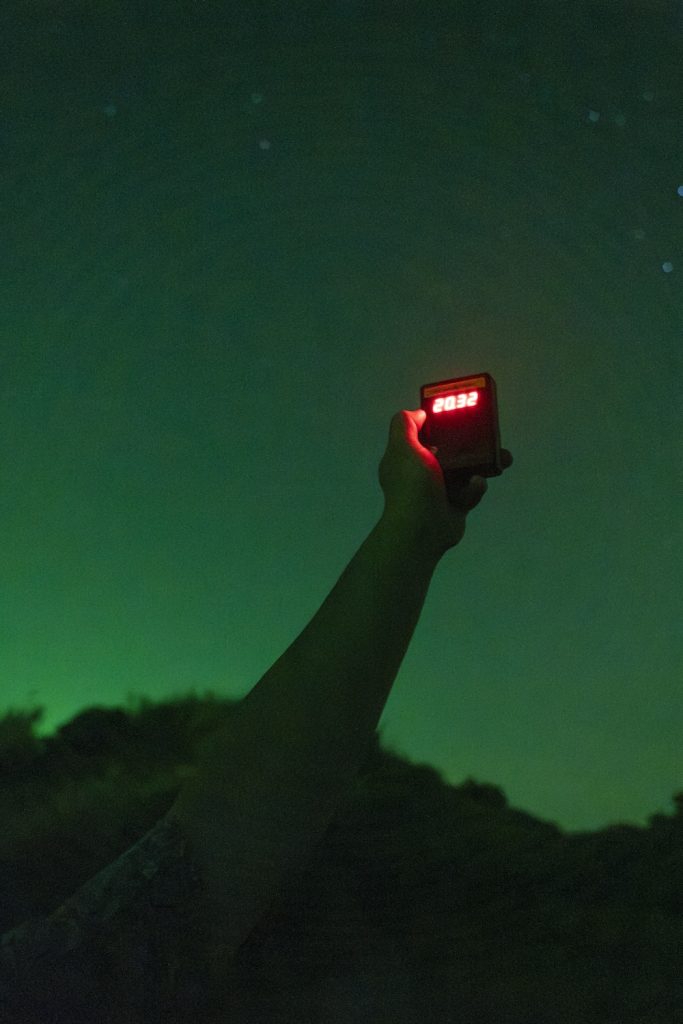
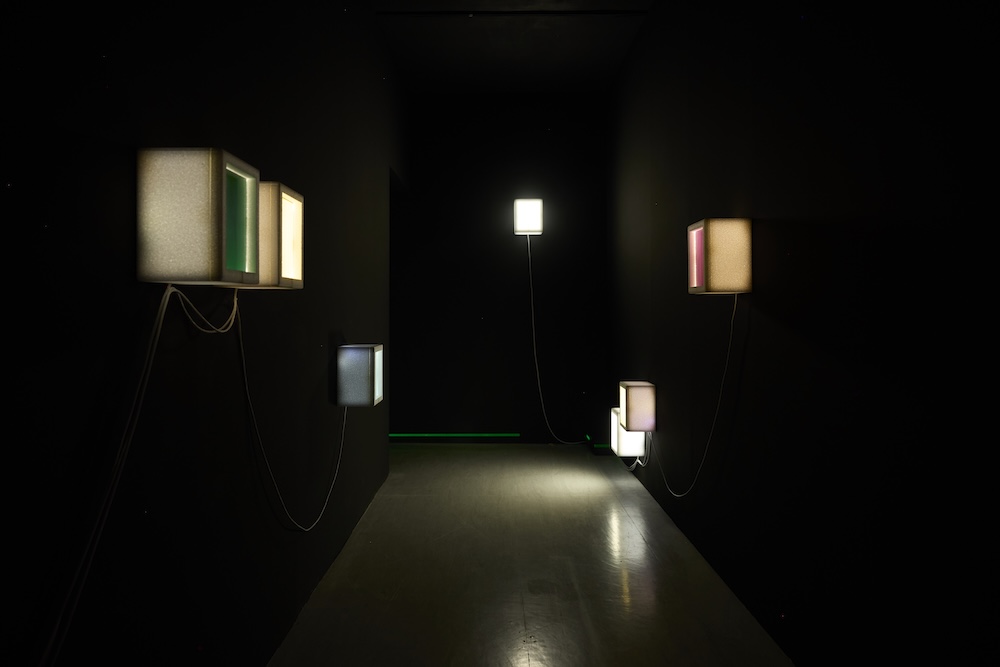
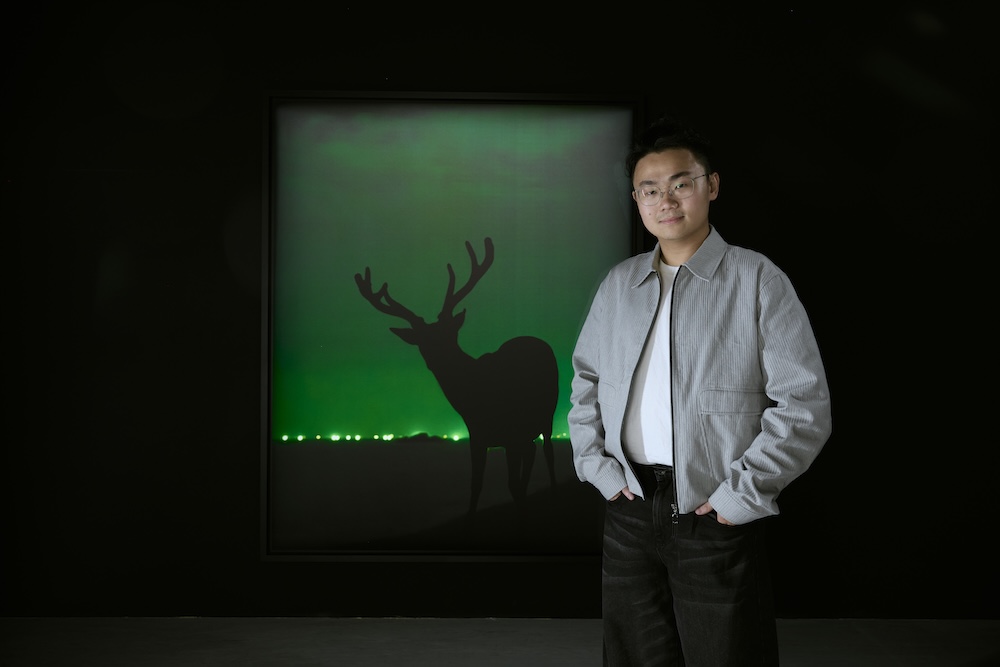
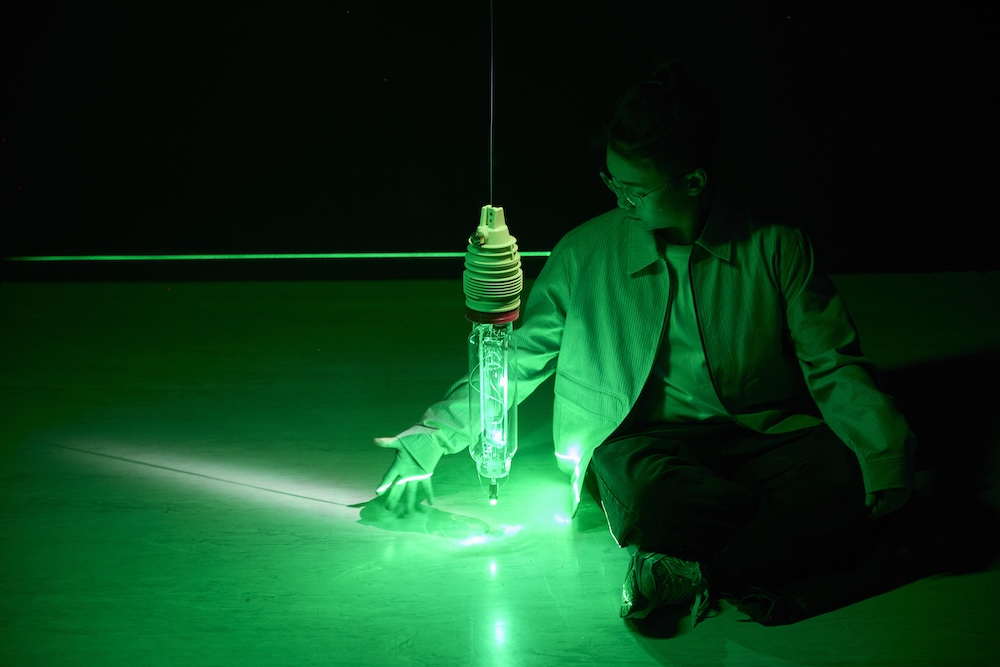
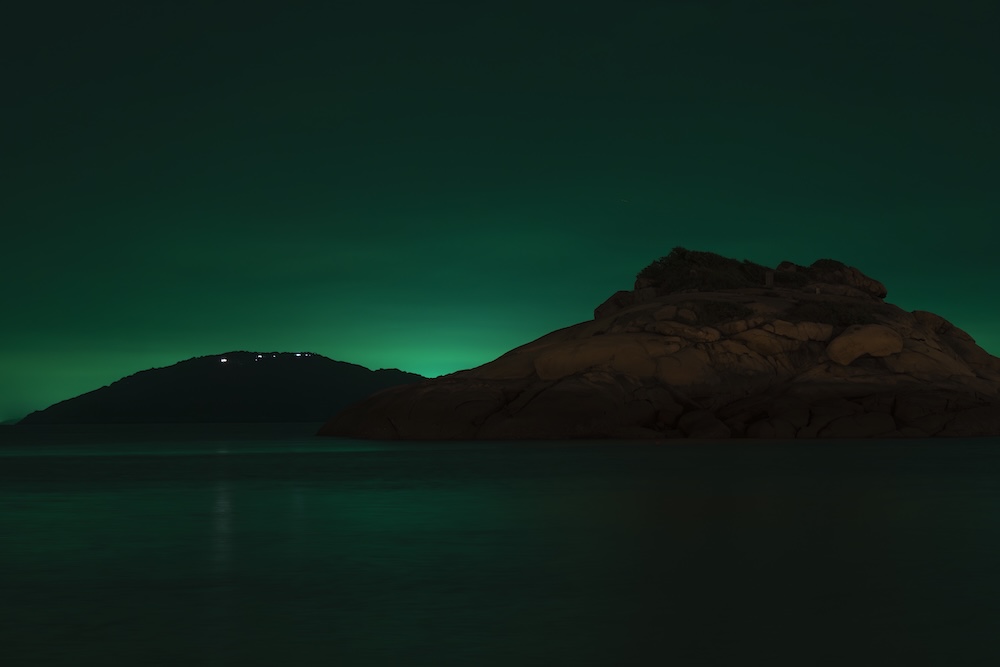
His art exhibit, A Dream Cast in Dormancy, includes practical light displays coupled with dozens of striking photos of a dark sky park. The photos show silhouettes of deer and neighboring islands outlined by a pure green sky. Just a handful of stars shine bright enough to pierce the light. A Dream Cast in Dormancy was showcased at Watershed Art & Ecology in Chicago, and most recently won the top Coalition for a Cultural Ecology (COAL) prize in France.


“He’s just absolutely brilliant and an incredibly talented artist,” said Professor Jenell Johnson, Su’s advisor in Communication Arts. “It’s been amazing to watch him bring that sensibility into a communication program and to blend his interest in rhetoric with his artistic practice.”
The pair connected in 2025 after Su discovered Johnson’s budding interest in the rhetoric of light pollution and the dark sky movement.
“Light pollution is one of those issues that for some people doesn’t seem that important,” she said. “When you start digging into it, you realize what a detrimental effect that light has on things like migrating birds, sea turtle reproduction, owls and other nocturnal animals.”
And there are effects beyond impacts on animals. A few hundred years ago, people could walk out their front doors in the evening and look up to see the Milky Way. Light pollution has made this impossible in most habited places today.
Part of Johnson’s research examines how dark sky advocates must make challenging arguments in their work. “Light has long been equated with safety and darkness with danger, and these deep connections, and even deeper feelings, pose a challenge to advocates working to reduce light pollution,” she stated.
Despite these challenges, advocates outline simple solutions for people to reduce their light pollution. Acts like turning off a porch light at night, changing the color temperature of a lightbulb, or installing light shields to direct light at the ground are easy ways to dramatically reduce light emissions.
Su and Johnson visited Taiwan this fall to participate in the International Dark Sky Forum. There, Su exhibited his artworks for A Dream Cast in Dormancy at the Taipei Arts Awards, giving the work a local platform and building awareness of the fishing practice from a Taiwanese perspective.
“Chang-Ching’s work blends science, art, and the humanities into something both beautiful and important,” said Johnson. “In that way, I think he really represents what makes work in Communication Arts so unique.”
The department is delighted to share some of Su’s work that embodies his critical eye and creator’s spirit. You can view this story online to see more work from A Dream Cast in Dormancy.