Exploring Climate Change in Chile and Beyond
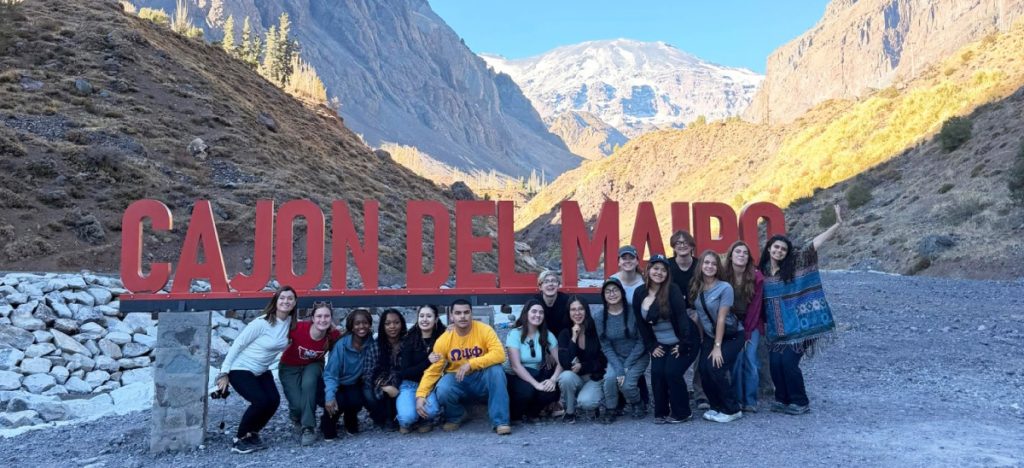
During summer in Wisconsin, many UW students try to stay cool. This June, however, 15 students ventured to Santiago, Chile, and weathered a wide range of climates as they explored how climate change is affecting the Southern Cone of South America. This study abroad program is a part of the Global Gateway Initiative, which aims to immerse students in hands-on learning experiences abroad as they explore a variety of world issues.
This summer was the first year Global Gateway offered a program in Latin America, which provided a unique opportunity for Communication Arts Professor, Sara McKinnon, to get involved. In addition to her work in Communication Arts, McKinnon simultaneously serves as the Director of the Latin American, Caribbean and Iberian Studies Program (LACIS) on campus. She collaborated with Dan Gold, Global Gateway’s Director, to build this inaugural course, “Climate Change in Chile and Beyond.”
Chile stood out as an obvious choice of location for this sustainability-focused program. It’s the longest country in the world, the Andes mountain range spans its entire length, and it is neighbored by nearly 4,000 miles of Pacific coastline, creating countless unique microclimates.
“If you think about all of the different climates and ecosystems that exist around the world, Chile has all of them, from the driest part in the world, the Atacama Desert where there’s 0% humidity, to the glaciers at the southern tip in Patagonia,” said McKinnon. “That also then presents climate opportunities and climate challenges.”
For three weeks, the course exposed students to Chile’s environmental practices, including energy transition, privatization of water, and farming, while highlighting how the country’s culture, history, and contemporary politics shape what climate justice looks like.
Communication Arts student, Jacinda Clifton, was one program participant and highlighted how classroom activities mixed with hands-on experiences to make the opportunity richer.
“The streets became another classroom,” Clifton remarked. “I coasted pacific seas, kissed the Andes with my feet, and heard Spanish voices of sellers on the street. Chile erected an earthly shrine within my mind that has grown as tall as the elongated country’s mountains.”
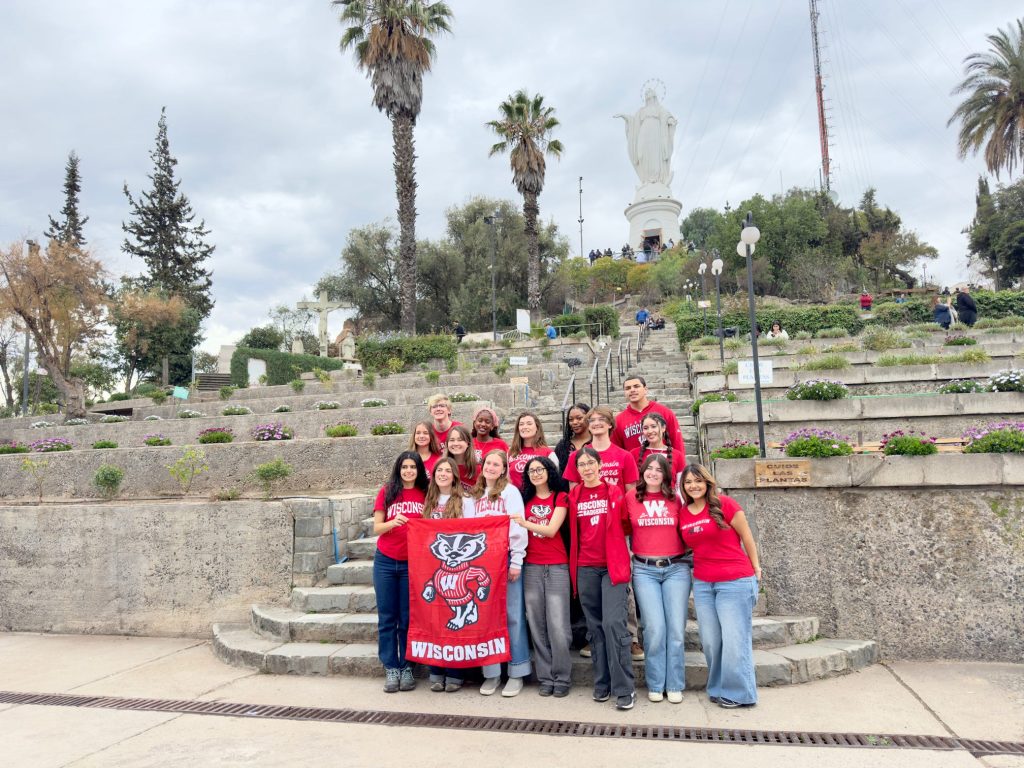
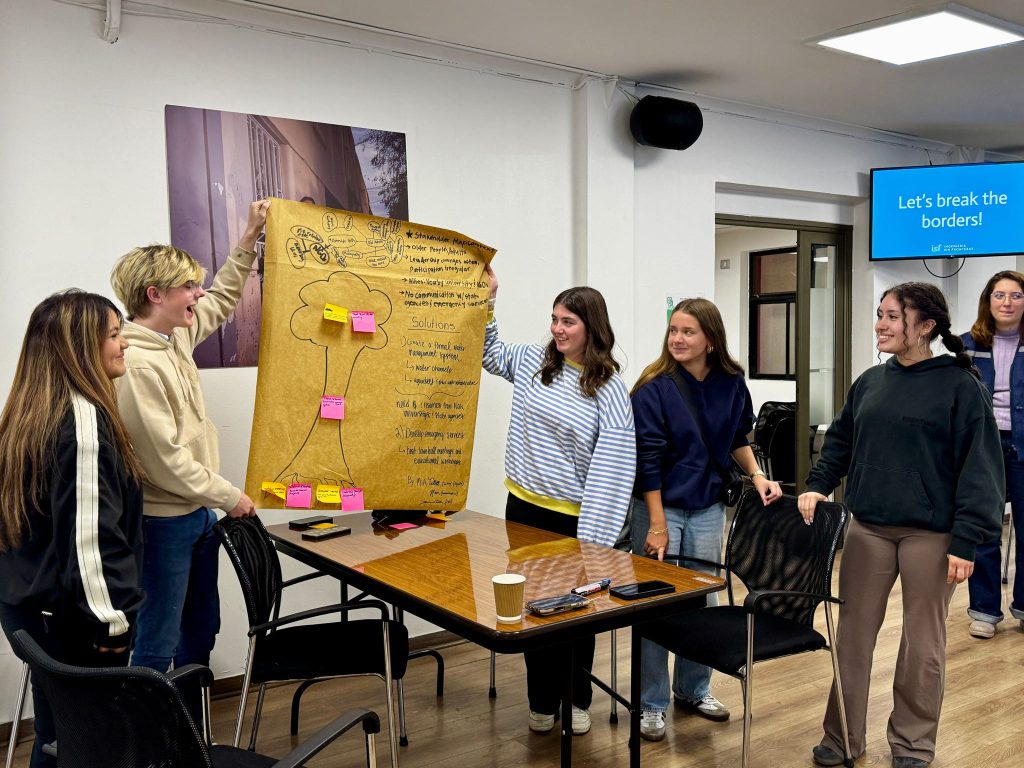
During the course, the group ventured to the Chiloé islands right north of Patagonia to witness salmon and mussel farming. They visited hydroelectric dams to understand the benefits and complications about this green source of energy. In Santiago, they met with workers at EcoCitex, a local organization that is working to take discarded fast-fashion clothing dumped in the Atacama Desert and reconvert it to thread for reuse. They also visited another company that is specialized in producing ocean-friendly cleaning products.
Throughout their experience, students were asked to take inspiration from what they saw and develop a proposal for a sustainability initiative that could be implemented back on campus. Students brought ideas that ranged from aluminum waste clean-up in Lake Mendota, to reduction of fast-fashion consumption, to creating infrastructure in the dorms that would reduce wasted energy consumption. McKinnon felt many of the projects were feasible and is encouraging students to apply for the Green Fund through the Office of Sustainability to put their ideas into action.
Now back on campus for the Fall 2026 semester, McKinnon and her students are allowing their newfound thoughts and experiences to color their future work.
“By crossing mountains and sea lines and getting immersed within a place, the indispensable global skills of stronger empathy, understanding, and adaptability can be fostered,” Clifton said, demonstrating how opportunities to study abroad can transform students’ time at UW–Madison and well beyond.