Rhetoric, Politics, and Culture Professor Allison Prasch and RPC Graduate Students Win Awards at NCA
The Department of Communication Arts was well-represented at the recent National Communication Association (NCA) conference in New Orleans, Louisiana, and several members of the Rhetoric, Politics, and Culture division took home honors for their work.
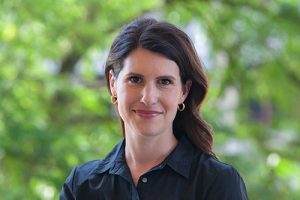
The Political Communication Division honored Dr. Allison M. Prasch with an Outstanding Article Award for her 2021 article “The Rise of the Global Rhetorical Presidency,” which was published in Presidential Studies Quarterly volume 50, no. 2. (pp. 327-356). Dr. Prasch is an Assistant Professor of Rhetoric, Politics, and Culture in the Department of Communication Arts and her research focuses on the intersections of rhetorical theory and history, U.S. presidential rhetoric, foreign policy, and space/place. Her first book, The World is Our Stage: The Global Rhetorical Presidency and the Cold War (University of Chicago Press, 2023), examines how U.S. presidents used their international travels to expand the reach of presidential power and extend the United States’ global influence. Her work has been published in the Quarterly Journal of Speech, Rhetoric & Public Affairs, Presidential Studies Quarterly, Southern Communication Journal, and Women’s Studies in Communication.
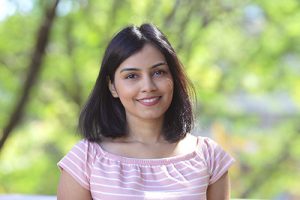
The American Society for the History of Rhetoric awarded Rhetoric, Politics, and Culture PhD student Shreya Singh with the Outstanding Student Paper award for her submission, “The Indian Suffragettes Photograph: Memory Across Time.” Shreya’s background is in Journalism and Mass Communication, with industry experience in journalism, advertising, and social media marketing. She received an MA in Communication and Media from the University of Northern Iowa, and her current research focuses on Indian nationalism, transnational feminism, and neocolonial challenges, with the broader intention of questioning how communication theories developed in western communication studies discourse might be reconfigured, used, and/or challenged to account for the postcolonial rhetorical landscape.
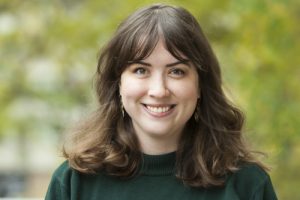
Rhetoric, Politics, and Culture PhD candidate Allyson Gross was also awarded an Honorable Mention by the American Society for the History of Rhetoric for her paper, “In the Saga of Time: Temporality and Citizen Opposition to Radioactive Waste in Wisconsin.” Allyson’s research focuses on time and temporality, material rhetoric, and the future.